
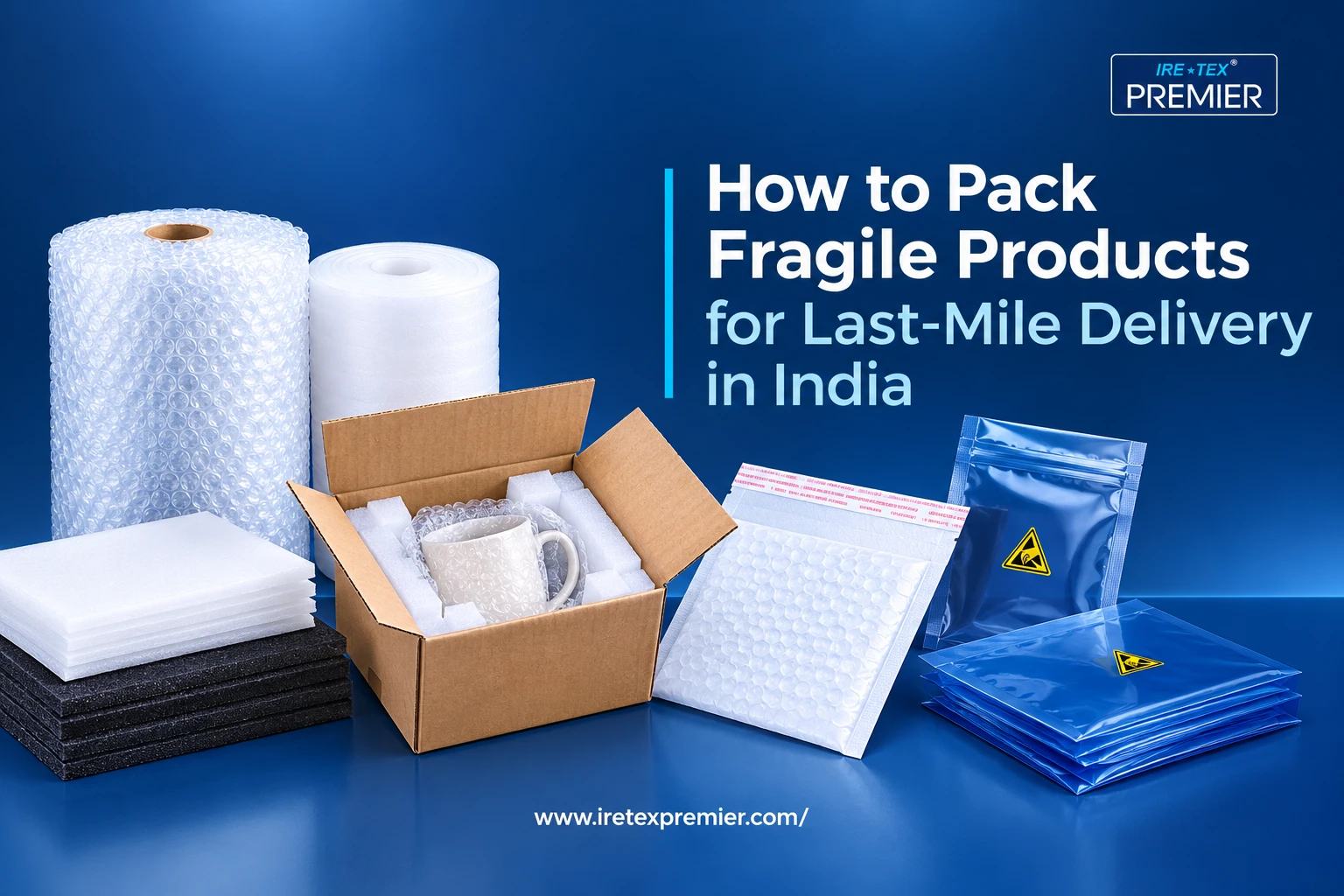
Last-mile delivery is the final and most unpredictable stage of any shipment. A package may travel across the country without a scratch, only to arrive broken after the last few kilometres. For fragile products, this is where most damage happens.
In India, last-mile delivery involves a mix of road conditions, manual handling, high-volume sorting centres, and varying weather across regions. A product packed well for a warehouse environment may not survive the back of a two-wheeler on a busy road in Bengaluru or Chennai. Understanding what your packaging needs to withstand is the first step to getting it right.
This guide walks through how to pack fragile items properly for last-mile delivery in India, which materials work best, and how to reduce damage before it becomes a cost.
Most transit damage does not happen in a single dramatic drop. It builds up through repeated vibration, compression from stacked parcels, moisture exposure, and occasional rough handling at sorting facilities.
For fragile products, the risks are higher because even minor impact can cause irreversible damage. A cracked ceramic, a shattered glass, a bent electronic component, or a dented decorative item all result in the same outcome: a return, a replacement, and a frustrated customer.
Last-mile conditions in India vary considerably. Urban deliveries involve high-volume sorting and quick handoffs. Rural and semi-urban deliveries may involve longer rides on uneven roads with little temperature control. Packaging that works in one context may not hold up in another.
Not all fragile products need the same protection. Before choosing materials, identify what your product is most vulnerable to.
Identifying the specific risk first helps you choose the right materials without over-packing or under-packing.
The product should never touch the inner wall of the box directly. Always wrap it first.
Once wrapped, the product needs an outer container that holds everything in place and adds structural strength.
Empty space inside a box is one of the most common causes of transit damage. Pack foam rolls, bubble wrap, or cushioning sheets around the wrapped product until there is no movement. The product should not shift at all inside a properly filled box.
A well-packed item can still arrive damaged if the seal fails.
Before using a packing method for all orders, send a test parcel to a typical delivery destination. When it arrives, check for:
If any of these have happened, adjust your method before scaling up.
The quality of materials matters as much as the method. Low-quality bubble wrap that collapses after a single impact offers little protection on the next. EPE foam that crumbles under compression will not absorb shock the way it should.
Iretex Premier packing material manufactures and supplies the following for both retail and industrial use:
All products are available in a range of sizes and thicknesses to suit different fragility levels and parcel dimensions. For businesses that ship fragile items regularly, consistent and quality-tested materials reduce the variability that leads to damage claims.
Every return caused by transit damage has a cost. There is the replacement product, the reverse logistics, the customer service time, and the damage to customer trust that is harder to put a number on.
Getting the packaging right the first time is a more cost-effective approach. The materials cost a fraction of what a single return and replacement does, and the consistency it brings to your fulfilment process reduces risk across every order.
If you are looking for packaging materials for fragile product shipments, Iretex Premier supplies across Bengaluru, Chennai, and Hyderabad, with bulk ordering and customisation available. Contact the team to discuss what your shipments need.
What is the best material for packing fragile items for delivery?
Bubble wrap cushions impact and wraps easily around most shapes. For heavier items, EPE foam offers denser protection. For electronics, always apply anti-static wrapping as the first layer.
How do I prevent fragile products from moving inside the box during transit?
Fill any void space with foam rolls, bubble wrap, or cushioning sheets until the product cannot shift inside the closed box. Movement during transit is one of the main causes of damage for fragile items.
Are bubble mailers suitable for fragile items?
Yes. Bubble mailers work well for smaller, lighter fragile items, with poly options resisting moisture and metallic foil adding insulation. For heavier items, a corrugated box with internal cushioning is the better choice.
Why is last-mile delivery particularly risky for fragile products in India?
Last-mile delivery in India involves high-volume urban sorting, uneven roads, and multiple touchpoints. Fragile products face more risk at this stage than at any other point in transit.
Does Iretex Premier supply packaging for fragile product shipments?
Yes. Iretex Premier supplies bubble wraps, EPE foam, foam sheets, anti-static packaging, and bubble mailers for fragile shipments. Bulk ordering and customisation are available for regular shippers.